As Educate Girls expanded its reach across Rajasthan, Madhya Pradesh, and Uttar Pradesh, it faced a common but critical issue: stories from the field weren’t doing justice to the impact on the ground. With over 18,000 Team Balika volunteers and more than 18.6 million children reached, the raw material was rich—but the narrative often fell flat. The regional communications teams, while deeply embedded in the work, needed support to tell stories that truly resonated.
Educate Girls wanted Comms Ninja to design and facilitate a storytelling workshop that would help their regional team:
The goal wasn’t just better writing—it was a stronger, more intentional storytelling culture across regions.
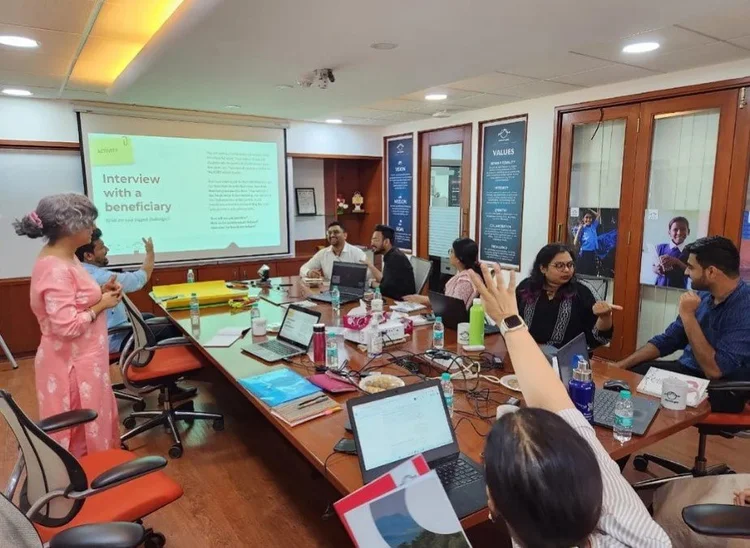
We designed a three-part, interactive workshop built around real-time reflection and practice:
1. Identifying Roadblocks
Participants unpacked current storytelling habits and discussed what makes a story engaging. We pushed them to shift the focus from external drama to internal transformation—highlighting personal shifts, not just programme milestones.
2. Extracting Insights through Role-play
Through guided simulations, the team explored how deeper relationships with volunteers and field workers could unlock more meaningful narratives. One insight stood out: you can’t tell a good story if you haven’t built trust first.
3. Writing It Right
Participants edited real samples of their own writing, focusing on language that may unintentionally reinforce stereotypes. A guest session with Sneha Philip from India Development Review brought home a key point:
let the story emerge from the field, not a pre-decided plotline.
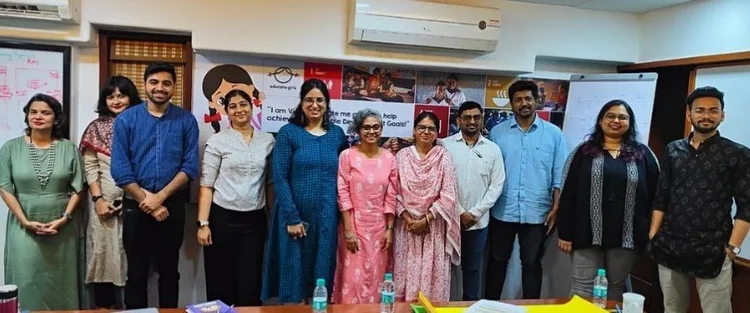
This workshop sparked more than a few lightbulb moments—it reframed the way the team approached storytelling altogether. Some of the biggest shifts included: